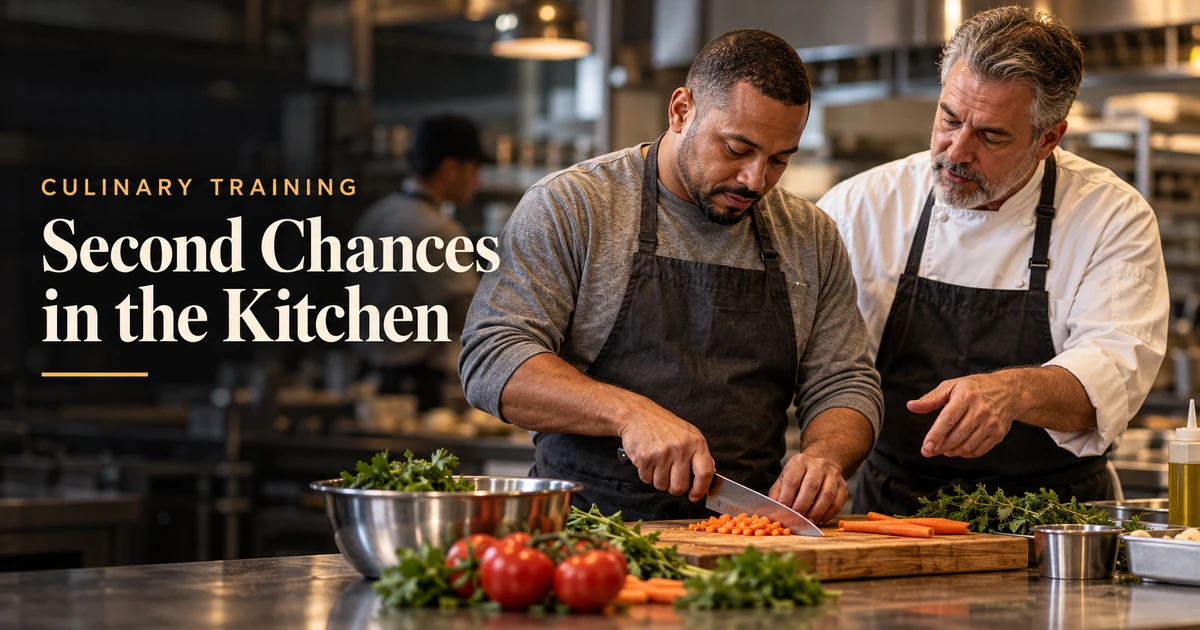
A second chance often starts with a single opportunity. For people returning to society after incarceration, rebuilding their lives can be challenging. Finding stable work, gaining confidence, and proving that change is possible all require support and the right opportunities.
One path that has helped many individuals move forward is learning practical skills that can lead to meaningful careers. Culinary training after incarceration is one example of how education, discipline, and hands-on experience can help people develop a new direction.
Cooking is not only about preparing food. It teaches responsibility, teamwork, patience, and commitment. These skills can become the foundation for personal growth and a fresh start.
In From Cell Block to Waffle House by Louis Campos, Edward Mitchell’s story shows how learning culinary skills during incarceration helped him discover purpose and rebuild his life. His experience highlights how training, mentorship, and determination can create opportunities beyond a person’s past.
How Food Education Creates Opportunities After Prison
Returning to society after incarceration comes with many challenges, and finding employment is often one of the biggest obstacles. A criminal record can limit opportunities, even for people who are ready to make positive changes.
Food education can provide a practical way forward. Culinary skills can open doors in restaurants, catering, hospitality, and other food-related careers. These skills give individuals something valuable to offer while helping them develop confidence in their abilities.
For someone trying to rebuild their life, learning a trade can provide more than a job. It can create a sense of achievement and show that progress is possible through hard work and consistency.
The Role of Cooking Programs in Prison Rehabilitation
Cooking programs can play an important role in rehabilitation by teaching skills that extend beyond the kitchen.
A professional kitchen requires focus, teamwork, and accountability. Every task matters, from preparing ingredients correctly to working efficiently with others. These lessons can help individuals develop habits that support a successful transition after release.
In Ed Mitchell’s case, the prison kitchen became a place where he learned discipline and discovered his ability to create something positive. With guidance from people who recognized his potential, he began developing skills that later helped shape his future.
Rehabilitation is not only about serving a sentence. It is also about creating opportunities for personal growth and preparing people for life beyond incarceration.
Second Chances Through Culinary Careers
A culinary career can offer more than financial stability. It can provide a renewed sense of purpose and connection with others.
Many people leaving prison face the challenge of being judged by their past. A second-chance opportunity allows them to demonstrate their growth through their actions, work ethic, and commitment.
The food industry can be especially meaningful because it allows people to contribute directly to their communities. Preparing meals, serving customers, and working as part of a team can help rebuild confidence and create a positive identity.
Ed Mitchell’s transition into restaurant work shows this process. His journey was not without challenges, but his dedication helped him gain trust and move forward. His experience reflects how second chances through culinary careers can create a path toward a better future.
Finding Purpose After Incarceration Through Meaningful Work
Work can provide more than income. It can give people structure, responsibility, and a reason to keep improving.
For many individuals rebuilding their lives, meaningful work becomes an important part of their transformation. Having a goal to work toward can help replace uncertainty with motivation and direction.
Stories of redemption through culinary careers often share a similar message: change requires effort, but people can grow when they have access to education, support, and opportunities.
A kitchen can become a place where someone learns more than cooking. It can become a place where they learn confidence, responsibility, and the value of contributing to others.
The Impact of Support and Mentorship
Skills are important, but support from others can make a major difference. Teachers, mentors, employers, and communities can help individuals recognize their potential and continue moving forward.
The story of Ed Mitchell shows how guidance and opportunity can influence personal transformation. His experience represents a redemption memoir inspiring to readers because it focuses on growth, accountability, and the possibility of creating a meaningful future after hardship.
Change does not happen overnight. It requires patience, commitment, and the willingness to make better choices every day.
Building a Future Through Opportunity
Culinary training after incarceration shows how learning a practical skill can become the first step toward rebuilding a life. A lesson learned in a kitchen can lead to a career, greater confidence, and a renewed sense of purpose.
Second chances are created when people have opportunities to learn, work, and prove themselves. While the past cannot be changed, the future can be shaped through determination and support.
Sometimes, a new beginning starts with a simple opportunity and the willingness to make the most of it.